
How to Keep Your Dog Visible on Early-Morning and Evening Walks
Early mornings and evening walks have their own kind of calm. The streets are quieter, the air can feel cooler, and your dog still gets the movement and sniffing time they need. The one thing that changes is visibility.
A few small habits can help drivers, cyclists, neighbors, and other dog walkers see you sooner. Here is a simple low-light walking routine you can use before the sun is fully up or after it has gone down.
1. Choose the most visible route you can
When light is limited, route choice matters. Use sidewalks, paths, and crossings with good street lighting whenever possible. Avoid walking in the road, between parked cars, or along paths where bushes and dark corners make it harder for people to spot you.
2. Add a steady light
A small clip light, headlamp, or waist light can make you much easier to notice. Use a steady beam when you want people to judge your position clearly. If you use a flashing light, keep it comfortable for your dog and considerate of people you pass.
3. Add reflective details
Reflective tape, a reflective vest, or a reflective accessory can help when a car’s headlights reach you. Reflective gear is different from a light, so treat it as an extra layer rather than the only visibility tool.
4. Keep your dog close in busy areas
Shorten the leash before driveways, crossings, corners, and parking-lot entrances. Keeping your dog on the side away from traffic gives both of you more room to react. It also makes your movements easier for other people to read.
5. Pick bright gear and check the fit
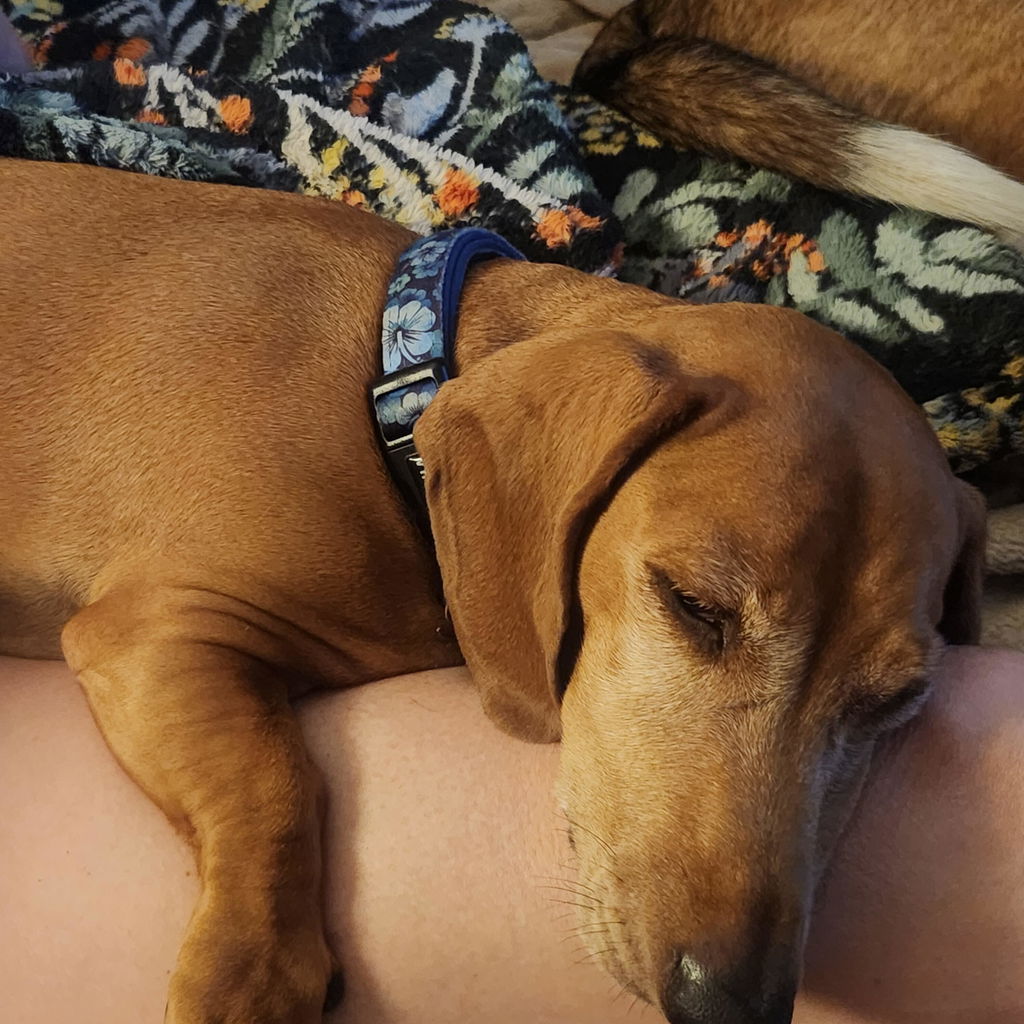
Color cannot replace a light, but a brighter walking setup can be easier to notice. The Golden Sunset Collar brings a warm, high-contrast color choice to the daily walk. Whatever collar you use, check that it is snug without being tight and that the buckle and D-ring are secure before you head out.
6. Use a leash and harness setup you can control
Low-light walks are not the time to discover that your leash handle is uncomfortable or your dog’s harness needs adjusting. The Hawaiian Tropics Leash has a padded handle and weather-ready hardware for everyday outings. If your dog walks best in a harness, the Hawaiian Tropics Harness has adjustable neck and chest sizing plus two D-rings, so you can choose the connection point that works for your routine.
7. Slow down at crossings and driveways
Pause at every crossing, even if you have the right of way. Look and listen for turning cars, make eye contact when you can, and give driveways an extra second. A slower pace gives drivers more time to see you and gives your dog less reason to step into a blind spot.
8. Carry one small backup
Bring a spare light or a fully charged phone on longer walks. A backup is especially useful if your light stops working, the walk takes longer than expected, or you need to take a different route home.
A two-minute low-light checklist
- Choose a visible route with sidewalks and crossings.
- Turn on your light before you leave.
- Add reflective details where they make sense.
- Check the collar, leash, harness, buckle, and D-rings.
- Keep your dog close near traffic, corners, and driveways.
- Bring a charged phone and a backup light for longer outings.
Visibility is a shared habit. When you make yourself and your dog easier to spot, everyone gets a little more time to respond and the walk feels more relaxed.
Do you prefer early-morning walks or evening walks with your dog?